Buying Murano & Burano Glass and Lace
Two famous names, neither reserved the way buyers assume. Five things to know turn a risky purchase into a good one.
In this guide
Why is buying on these islands harder than it looks?
Because two famous names sell, and neither is legally reserved in the way buyers assume. A great deal of glass sold as Murano glass was made elsewhere, and a great deal of lace sold on Burano was not stitched there.
None of that makes the islands a trap. It makes them a place where knowing four or five things changes what you come home with.
What is the Vetro Artistico® Murano trademark?
It is the regional mark that certifies glass actually made on Murano. Where you see it, the piece was made on the island by a registered producer. It is the single most reliable test available to a visitor.
Its absence is not proof of anything — not every island maker registers — but its presence is meaningful, and asking about it tells a seller immediately that you know what you are looking at.
What does “Murano style” mean?
It means not Murano. The phrase exists precisely because the trademark cannot be used, and it is the clearest single signal on a label. Related formulations to treat the same way: “in the Venetian tradition”, “Murano-inspired”, “Venetian style”.
Is buying inside the furnace the safest route?
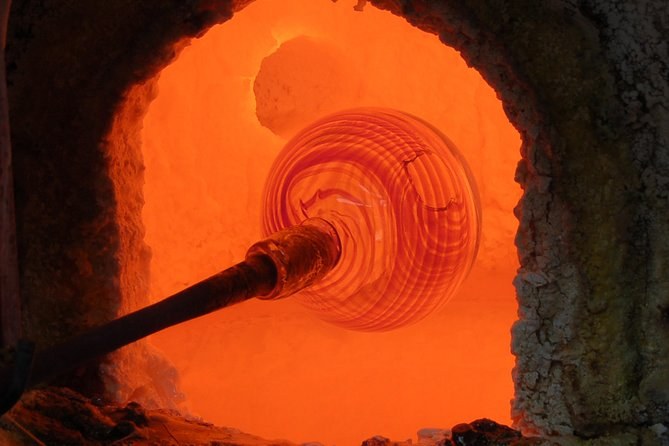
It is the most reliable one available to a visitor. If you have just watched the piece made, the provenance question answers itself, and the showroom the demonstration ends in is the producer's own.
That is the practical reason to walk through it rather than past it, whatever you make of the sales pitch. What the demonstration involves is on the Murano glass page.
What should things actually cost?
| Object | Island-made, roughly | Import, roughly | What to check |
|---|---|---|---|
| Glass beads / small pendant | €20–60 | €3–10 | Trademark sticker; weight in the hand |
| Drinking glass, hand-blown | €40–120 each | €5–15 | Slight asymmetry; a ground pontil mark |
| Small vase or bowl | €80–400 | €15–40 | Maker's signature or label |
| Chandelier arm / small fixture | Hundreds upward | Tens | Each arm blown separately, never identical |
| Burano needle lace, small round | €40–150 | €5–15 | No woven ground; no machine repeat |
| Lace collar or larger piece | Hundreds upward | €20–50 | Ask who made it and how long it took |
Indicative ranges for orientation only, at the time of writing. Prices are set by the makers and shops and move; nothing here is a quotation.
Why is some of it so cheap?
Because it was pressed or moulded in volume somewhere with lower costs, rather than blown by hand by a person who trained for years. That is a legitimate product at a legitimate price; it is simply not what the island is famous for.
Hand-blown glass carries hand-blown prices for the same reason hand-stitched lace does. A chandelier that costs less than dinner was not made by the process you watched.
How do you spot machine lace?
Turn it over. Handmade needle lace — Burano lace is worked as punto in aria, stitched onto a thread frame rather than into cloth — has no woven ground behind the pattern and no perfectly regular repeat.
Machine lace has both: an even mechanical rhythm across the whole piece, and often a fabric base the pattern sits on. Once you have seen the two side by side it is not subtle.
What should you ask in the shop?
- Where was this made? An island maker answers without hesitation and usually names the furnace or the maker.
- Does it carry the trademark? For glass, the direct question.
- Who stitched it, and how long did it take? For lace, the question that separates the two products entirely.
- Do you ship, and how is it packed? The answer tells you how often they do it.
What does a signature or label actually tell you?
Less than a trademark, and more than nothing. Established furnaces sign or label their work, usually on the base, and a signature you can look up afterwards is a good sign. What it is not is proof of age, value or rarity.
Two things to be wary of. A sticker is not a signature — stickers transfer between pieces trivially. And a certificate printed by the shop that sold you the piece certifies only that the shop is willing to print certificates.
If a seller cannot tell you which furnace made a piece, treat the object on its own merits and pay accordingly. Plenty of unsigned island glass is lovely; it is just not documented.
Does the colour tell you anything?
It tells you about the process rather than the provenance. Colour in glass comes from metal oxides added at the furnace: cobalt for the deep blues that dominate every showroom, copper and gold for reds, and gold leaf fused between layers of clear for the classic Venetian look.
Two Murano techniques are worth recognising by name because they are hard to fake cheaply. Millefiori builds a pattern in cross-section by fusing coloured rods into a cane and slicing it, so every slice carries the same flower. Avventurina suspends fine copper crystals so the surface reads as though dusted with metal.
Neither guarantees the island, but both are labour-intensive enough that a very low price is its own answer.
What is the part you never see?
The cold work. After the annealing oven, a piece is ground, cut and polished, and on anything stemmed that stage can take longer than the blowing did. It is invisible in the finished object and it is a real part of the cost.
It is also the easiest way to sense quality in the hand. Run a finger round the rim and the base: island work is finished smooth and even, and cheap moulded glass often is not.
Can they ship it home?
Murano furnaces ship internationally as a matter of routine, and for anything larger than a paperweight it is the sensible choice. Arrange it in the showroom rather than through a tour; the producer packs it and takes responsibility for it.
Keep the receipt and any certificate. It is what makes a claim possible if a piece arrives broken, and it is also what a customs officer will want to see.
What if it breaks in transit?
Ask before you pay how breakage is handled, and get the answer in writing on the receipt. Established makers replace or refund; a stall on the main street may not.
If you are carrying it yourself, cabin baggage rather than hold, and expect airport security to want a look at anything dense and opaque.
Is there a tax refund?
Non-EU residents can generally reclaim VAT on qualifying purchases above a threshold, with the paperwork issued by the shop at the time of sale and validated when you leave the EU. Thresholds and procedures change, so ask in the shop and confirm the current rules before relying on it.
Is there any haggling?
Not in the furnaces, and not in the established shops. Prices on island-made work are set, and pushing on them mostly signals that you have not understood what you are looking at.
Where a discount does exist it is usually structural rather than negotiated — one tour listed here carries a 20% showroom discount written into the listing, which is a better deal than anything you would argue your way to.
On the main-street stalls selling imported stock, haggling is possible and largely beside the point: the saving is a couple of euros on something that was never the thing you came for.
Are the museums worth adding?
If you are buying, yes, and in that order: museum first, shop second. The civic glass museum on Murano and the lace museum on Burano both show what the top of each craft looks like, and an hour in either recalibrates what you think a fair price is.
Neither is included in any tour fare listed here, so both are stops for your own free time. That is another argument for a departure with generous time ashore rather than the shortest crossing you can find.
What should you not buy?
Anything sold as an investment, anything a tout steers you to off the main street, and anything you are told is the last one at that price. None of those is how the island's own makers sell.
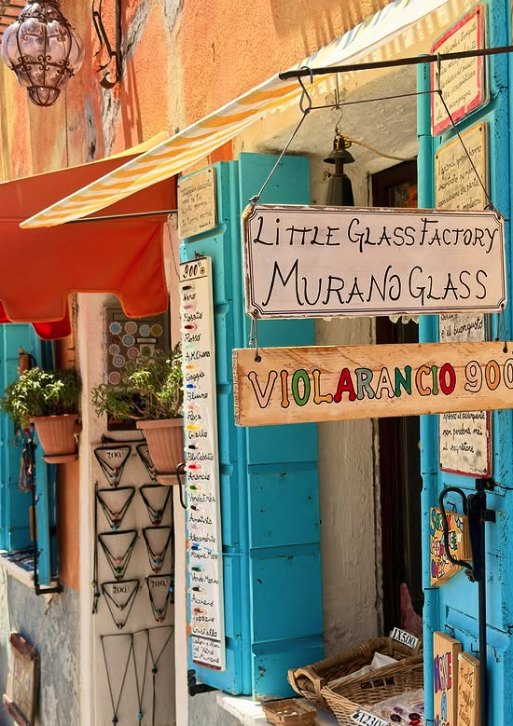
Also worth resisting: buying in the first ten minutes. Walk the Fondamenta dei Vetrai first, see the range between a €5 trinket and a signed piece, then decide.
Want to buy where it is made?
The departures that include a working furnace and time to browse afterwards.
Free cancellation up to 24 hours ahead on every departure listed.
How the glass is made is on Murano glass, the lace technique on Burano lace, and Murano & Burano Islands Tours lists every departure that includes a furnace visit.
Frequently asked questions
How can I tell if Murano glass is real?
What does “Murano style” mean on a label?
Is Burano lace sold on Burano made there?
Can Murano glass be shipped internationally?
Do any tours include a discount in the glassworks?
Tours that fit this trip
Chosen for what this page covers, not for what sells.